Cinematic Studio Solo Strings: The Definitive Guide to Expressive Solo String Mockups
Cinematic Studio Solo Strings sets the benchmark for expressive solo string quartets in Kontakt. Discover its features, articulations, microphone positions, and first-chair layering techniques for film and media scoring.
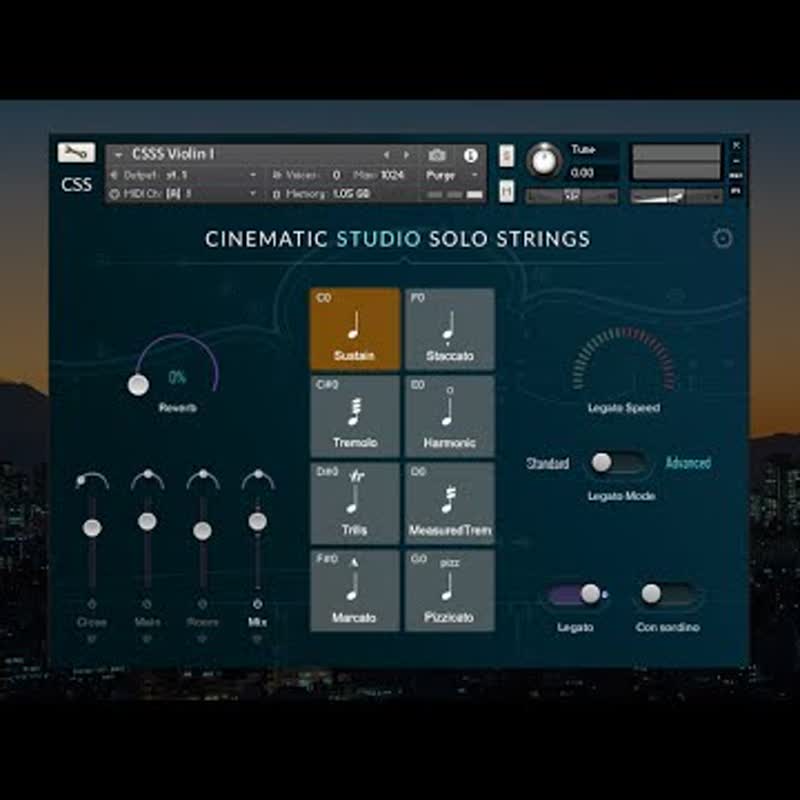
Cinematic Studio Solo Strings (CSSS) is a flagship solo string quartet virtual instrument developed by Alex Wallbank and the Cinematic Studio Series team. Recorded at the iconic Trackdown Studios scoring stage in Sydney, Australia, CSSS delivers an intimate, warm, and hyper-realistic string quartet sound composed of Violin 1, Violin 2, Viola, and Cello.
Building upon the acclaimed success of Cinematic Studio Strings (CSS), CSSS features the exact same recording venue, microphone setup, and intuitive GUI layout. This shared acoustic foundation allows composers to seamlessly use CSSS as a standalone chamber ensemble or as a 'first chair' soloist layer on top of full section orchestral libraries to infuse lifelike bow detail and solo expressiveness into dense arrangements.
Core Features and Articulation Suite
CSSS features four distinct soloists recorded individually with meticulous detail. The engine incorporates Cinematic Studio Series' signature velocity-sensitive legato system, which automatically transitions between smooth fingered slurs, dramatic portamentos, and agile fast legato phrasing based on key velocity and phrase speed.
Every soloist patch offers complete control over dynamic layers (via CC1 Mod Wheel), expression (CC11), and vibrato intensity (CC2), providing fluid emotional control without unnatural synthetic artifacts.
- True Legato & Portamento: Seamless interval transitions with realistic bow changes and dynamic velocity-controlled portamento speed.
- Short Articulations: Crisp Spiccato, Staccatissimo, Staccato, and Sforzando with multiple round-robins for natural rhythmic variation.
- Specialist FX & Bowing: Bartók snap pizzicato, standard Pizzicato, Col Legno (striking with the wood of the bow), Tremolos, and Trills (half/whole step).
- Marcato & Fast Runs: Bold, accented attack layer ideal for energetic lead lines and fast scalar passages.
- 4 Microphone Positions: Mixable Close, Main, Room, and pre-mixed Mix channels recorded through premium studio consoles and vintage tube microphones.
Who Is Cinematic Studio Solo Strings For?
Film, TV & Game Composers: Essential for intimate dramatic scoring, emotional character themes, indie film cues, and period dramas requiring authentic string quartet textures.
Modern Pop & Classical Producers: Provides rich acoustic string arrangements for pop ballads, singer-songwriter tracks, neo-classical productions, and ambient acoustic layers.
Orchestral Mockup Specialists: Composers seeking the ultimate 'First Chair' layering library to add human bow noise, rosin grit, and individual pitch expressiveness on top of ensemble string sections.
First Chair Layering & Production Workflow
One of the most effective production techniques in modern media scoring is layering solo string instruments over section strings. Large ensemble libraries provide lush power but can sometimes sound overly homogenized. Adding CSSS soloists on top introduces realistic individual bow changes and upper-mid frequency definition that cuts through a dense mix.
To achieve flawless integration between CSSS and ensemble string libraries, follow these proven mixing and programming steps:
- Mirror Dynamic Automation: Copy your
CC1(Modulation) andCC11(Expression) curves from your section strings to your CSSS track to ensure synchronized dynamic swells. - Balance Microphone Perspective: Blend more of the CSSS Close mic position (around -6dB to -10dB relative to Main) to emphasize bow bite, while keeping section strings in the hall perspective.
- Apply DAW Track Delay Offset: Set a negative track delay of approximately
-60msto-100ms(depending on legato speed mode) in your DAW to compensate for realistic legato sample pre-delays. - High-Pass Filter Solo Lows: Insert a gentle high-pass filter at
150 Hzon the solo violin/viola layers when blending with ensembles to prevent low-end mud.
CSSS vs Alternative Solo String Libraries
Compared to competitors like Spitfire Solo Strings or Orchestral Tools Soloists, Cinematic Studio Solo Strings stands out for its out-of-the-box warmth and consistent workflow. While Spitfire offers a wider variety of esoteric articulations and drier close-mic options, CSSS excels at instant musicality and cinematic cohesion.
For composers already utilizing Cinematic Studio Strings, CSSS is an absolute essential. The identical room acoustic at Trackdown Studios guarantees zero phase cancellation or tonal mismatch when layering soloists over full sections.
Frequently asked questions
Does Cinematic Studio Solo Strings require the full version of Kontakt?
No — CSSS is officially licensed for Native Instruments <strong>Kontakt Player</strong> (version 5.8.1 or higher) as well as the full version of Kontakt. It also supports NKS (Native Kontrol Standard) integration.
How does CSSS blend with Cinematic Studio Strings (CSS)?
Because CSSS was recorded on the exact same scoring stage at Trackdown Studios with identical mic techniques as CSS, the two libraries blend effortlessly without requiring extra EQ matching or artificial reverb.
What track delay setting should I use for CSSS legato?
A negative track delay offset of <strong>-60ms to -100ms</strong> in your DAW is recommended when using legato patches to align the natural bow transition pre-delay with your DAW grid.
Is a Double Bass soloist included in CSSS?
No — CSSS focuses specifically on the standard string quartet instrumentation: Violin 1, Violin 2, Viola, and Cello.