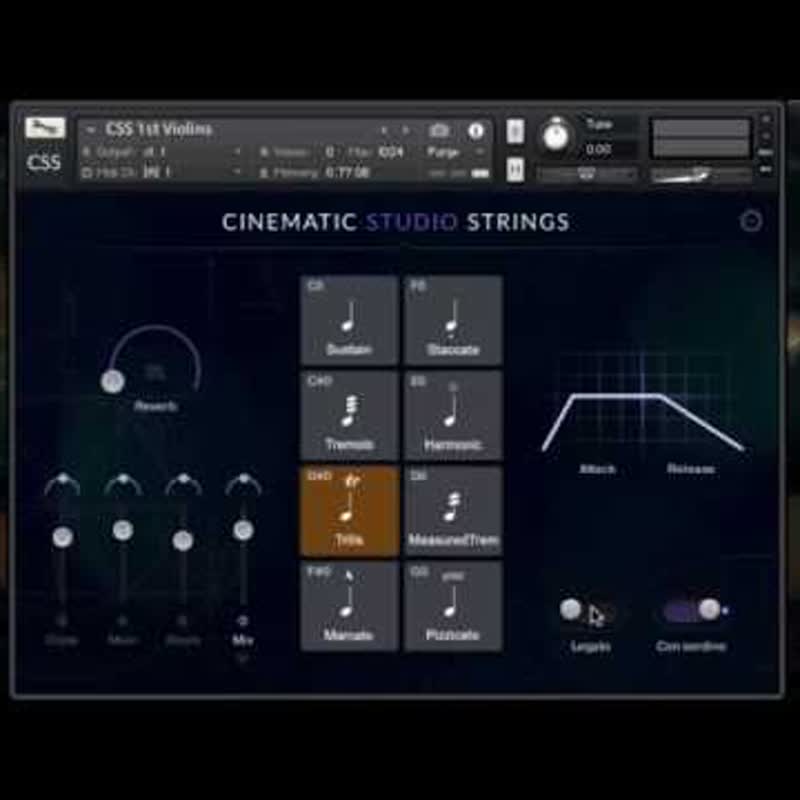
Cinematic Studio Strings: The Benchmark Orchestral Library for Film and Media
Cinematic Studio Strings earned its reputation through long sustain recordings, a warm London room sound, and a legato engine that remains among the most realistic in Kontakt. Here is what makes it essential for film and media composers.
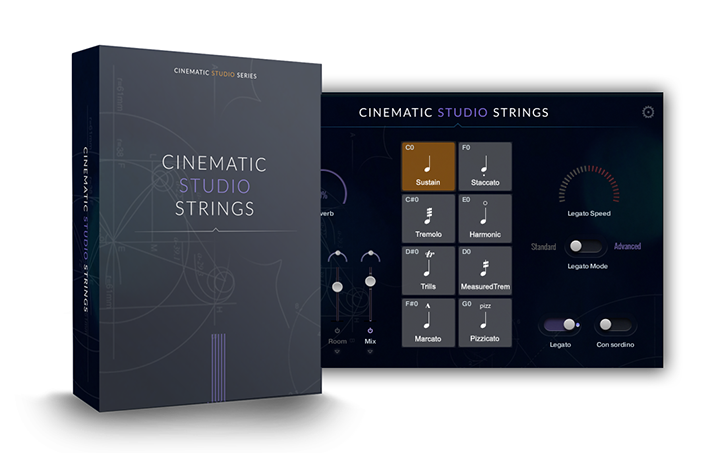
Cinematic Studio Strings (CSS) set a new standard when it arrived by prioritizing sustained expressiveness over fast attack response. While many orchestral libraries chase tight, punchy articulations suited to hybrid action scores, CSS was recorded with long bow strokes and generous room tail at a boutique London studio, resulting in a warmth and bloom that sits immediately in a mix without heavy reverb processing. That recorded-in-the-room character is difficult to fake with post-processing, and it is the core reason the library became a go-to reference point for lush, emotional string writing.
The interface keeps complexity to a minimum. Kontakt hosts two performance slots, letting you layer a legato patch with a sustain or a short for instant textural depth. The legato engine deserves special attention: CSS legato transitions are widely considered among the most realistic available in any sample library, capturing the natural bow change and vibrato swell that human players produce between notes. For composers working on slow-building cues, intimate scoring for drama, or ambient soundscapes that need organic string movement, CSS delivers that performance feel without requiring deep sampler programming.
Who CSS Is Built For
Film and television composers who write emotionally driven cues will find CSS especially well suited to their workflow. The library shines on slow harmonic movement, string pads, melodic lines with long phrases, and sweeping ostinatos where sustain and legato tone matter more than percussive articulation. Media composers producing trailers or hybrid scores should be aware that CSS alone may feel too soft on aggressive staccato rhythms, but that is by design rather than a limitation.
Ambient producers and neo-classical artists are a natural fit. The warm room acoustic means CSS blends effortlessly with piano, choir, and synth pad layers without fighting for space. The decay character also works well under reverb-heavy treatment, giving ambient tracks a sense of depth that synthetic string patches rarely achieve.
Beginners to orchestral sampling will appreciate how quickly CSS produces musical results. The two-slot interface avoids the paralysis that comes with libraries offering dozens of mic positions and dozens of round-robin layers. You load a patch, play a phrase, and it already sounds like a real string section performing in a real room.
Layering CSS with Close-Mic Libraries
CSS records in a natural hall perspective, which means the close-up bite and string noise that gives orchestral writing its edge is slightly smoothed over. A practical technique used by many film composers is to layer CSS with a drier, close-miked library such as Spitfire LABS Strings or a short-bow articulation library to add definition to attacks without losing the warmth in the sustain body. CSS sits underneath and provides the harmonic richness while the close library provides the transient front edge.
Another effective combination is CSS sustained strings underneath a short-articulation library for rhythmic figures. Program the legato CSS layer to follow the root note or chord and trigger the short library separately for the rhythmic pattern. The sustained warmth underneath makes the rhythmic shorts feel grounded rather than thin, which is a common problem when using only fast, dry staccato patches.
- Keep CSS at full level in the mix.
- Bring the close library in at around 20 to 30 percent of the mix.
- High-pass the close library above
200 Hzso it contributes only upper-mid attack definition without muddying the low string register.
CSS vs Drier, Faster Libraries
The comparison most frequently made is between CSS and Spitfire LABS Strings, which is free and uses a much closer recording perspective with less room. LABS Strings has faster attack response and a dry, intimate quality that works well in folk, singer-songwriter, and hybrid productions where the strings need to sit forward in a mix alongside modern production elements. CSS, by contrast, needs space in the arrangement and rewards slower, more spacious writing. They solve different problems and experienced composers often keep both installed.
Libraries like East West Hollywood Strings or Berlin Strings from Orchestral Tools offer more articulation depth and closer-mic options, but they come with significantly more complex interfaces and larger install sizes. CSS earns its place by being immediately usable and musically satisfying without a learning curve. For composers who need strings that sound real and emotional in under five minutes of setup, CSS consistently wins that comparison.
Frequently asked questions
Does Cinematic Studio Strings require a full version of Kontakt?
Yes — CSS requires the full version of <strong>Native Instruments Kontakt</strong> (<code>5.6.8</code> or later). It does not run in the free Kontakt Player because it uses custom scripting and a library format the Player does not support. Kontakt 6 or 7 (full) is recommended for best performance and compatibility.
Can CSS handle fast staccato passages and action-style scoring?
CSS is not the strongest choice for fast staccato rhythmic passages or hard-hitting action scoring. It was recorded with long bow strokes in a roomy London studio, so the attack response is softer and the room tail longer than aggressive hybrid cues typically demand. Combining CSS with a drier staccato library, or switching to a faster close-miked library for rhythmic parts, gives much better results.
How large is the CSS library and what kind of drive should I use?
The full CSS library is approximately <code>55 GB</code> installed. For best streaming performance — especially with multiple ensemble sections active simultaneously — install it on a fast SSD. Running CSS from a mechanical hard drive is possible but may cause increased load times and occasional streaming issues on dense patches.