
Heavyocity Damage 2: Cinematic Percussion for Trailers and Game Audio
Damage 2 delivers pre-processed, aggressive cinematic percussion built for film trailers, game audio, and hybrid orchestral scoring. Here's everything you need to know before you buy.
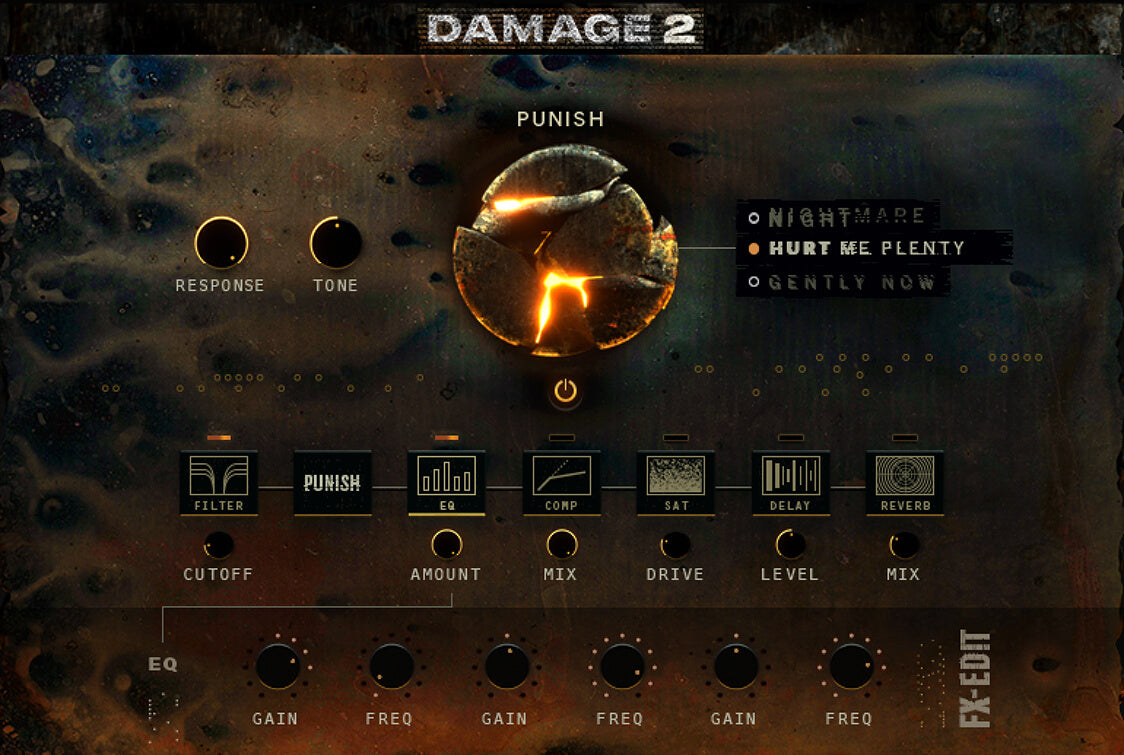
Heavyocity Damage 2 is a Kontakt-based cinematic percussion library built for one purpose: to hit hard. Designed for film trailer composers, game audio designers, and hybrid orchestral producers, it delivers heavily processed drum hits, thunderous loops, and textural percussion that sounds ready for placement the moment you trigger a note. Unlike acoustic drum libraries that try to replicate a real recording session, Damage 2 is engineered to be loud, aggressive, and emotionally overwhelming straight out of the box.
The library ships with two distinct engines. The legacy Damage engine carries forward the original content that made the first version a trailer industry staple, while the new Damage 2 engine brings an expanded roster of sounds including additional one-shot hits, processed loops, and hybrid tonal elements. Both engines share a unified interface with built-in gates, distortion, and compression, so you get a complete processing chain without ever leaving the instrument.
The Punish Knob and Core Sound Design Tools
The single most recognizable feature of Damage 2 is the Punish knob. Turn it clockwise and the instrument applies increasingly aggressive saturation, compression, and limiting to the signal. At moderate settings it adds weight and presence; pushed to its upper range it crushes the transient into something almost industrial. It's a one-knob solution for dialing in intensity without touching a separate compressor or distortion plugin, which makes it invaluable during fast-paced trailer or game audio sessions.
Beyond Punish, every patch in Damage 2 carries its own gate, distortion stage, and multi-band compression. The gate is particularly useful for tightening processed loops that might otherwise bleed into the next rhythmic hit. The distortion ranges from subtle harmonic saturation to full-on clipping, letting you push a thunderous low-end hit into something that carves through a dense orchestral mix. Together these tools mean you spend less time on post-processing and more time composing.
The Arpeggiator adds a rhythmic dimension that goes beyond simple playback. You can lock it to your DAW tempo and build patterns from single hits, turning a bass drum one-shot into a driving 16th-note pulse or a stuttering syncopated figure. For game audio designers building looping action cues, this feature alone can save hours of manual MIDI editing.
Who Uses Damage 2 and What It Is Built For
Damage 2 is the go-to library for media composers working in the trailer and promo space. Trailer houses that produce spots for major film studios and game publishers rely on it because it delivers the specific sonic aggression those formats demand. The processed, larger-than-life quality of the hits means they sit naturally in a mix alongside brass impacts, riser FX, and staccato string hits without requiring extensive layering or EQ work.
Game audio designers use Damage 2 for action, combat, and boss-fight cues where the percussion needs to feel both musical and visceral. Because the library is pre-processed rather than sampled flat, it integrates naturally into adaptive scoring systems without needing a separate mastering chain. Hybrid orchestral producers also reach for it when they want to add a modern, aggressive edge to a traditional orchestral arrangement, layering Damage 2 hits under live taiko or orchestral snare to create something that occupies both worlds.
If your work lives in the action, horror, or epic adventure genres, whether in film, TV, or games, Damage 2 covers the foundational percussion palette those genres consistently demand. It is less suited to jazz, acoustic pop, or any context where naturalism and dynamic nuance matter more than sheer impact.
How Damage 2 Differs from Acoustic Drum Libraries
The most common comparison is between Damage 2 and libraries like Superior Drummer 3. They are built for fundamentally different use cases. Superior Drummer 3 models the physics of a real drum kit in a real room: you get precise control over mic bleed, room tone, shell resonance, and every nuance a session drummer would produce. That depth makes it ideal for rock records, jazz sessions, and any production where authenticity to a live performance is the goal.
Damage 2 makes no attempt to replicate a real drum session. Its sounds are recorded hits processed through layers of saturation, resampling, and heavy compression before they ever reach your DAW. The result is a palette of sounds that simply do not exist in a natural acoustic environment. You cannot recreate a Damage 2 hit by recording a drum and adding plugins — the processing is baked into the character of the sample at every stage of its creation.
This distinction matters when choosing where to spend your budget. If you score trailers, games, or cinematic content, Damage 2 earns its place as a primary tool. If you produce music where the drum kit needs to sound like a drum kit, a modeling or multi-mic library like Superior Drummer 3 is the more appropriate investment. Many professional composers own both, layering Damage 2 hits beneath a more natural kit to get the best of both aesthetics.
Frequently asked questions
Do I need a full version of Kontakt to run Damage 2?
Yes — Damage 2 requires the full paid version of <strong>Native Instruments Kontakt</strong>. It does not run in the free Kontakt Player. A current Kontakt license is required before purchasing or installing the library.
Can Damage 2 be used for music outside of trailers and film scoring?
Damage 2 works in any context where aggressive, processed percussion fits: electronic music, industrial, metal production, and cinematic hip-hop all benefit from its sound palette. The <strong>Arpeggiator</strong> and loop content also make it useful for EDM and hybrid electronic genres. It is less suited to acoustic, jazz, or folk-oriented productions.
Is the legacy Damage content included or sold separately?
The legacy Damage engine and its original content are included inside Damage 2. You get both the original library and the new expanded content in a single package — no need to own or install the first version separately.
Recommended Related Products
Heavyocity Damage 2
Epic cinematic percussion engine built for trailers, action and hybrid scoring.