
NI Noire: The Nils Frahm Piano That Redefines Intimate Sound
Recorded by Nils Frahm on a Yamaha CFX in his Berlin studio, Noire is not a concert grand library. It is an artistic instrument built for neo-classical, ambient, and cinematic production.
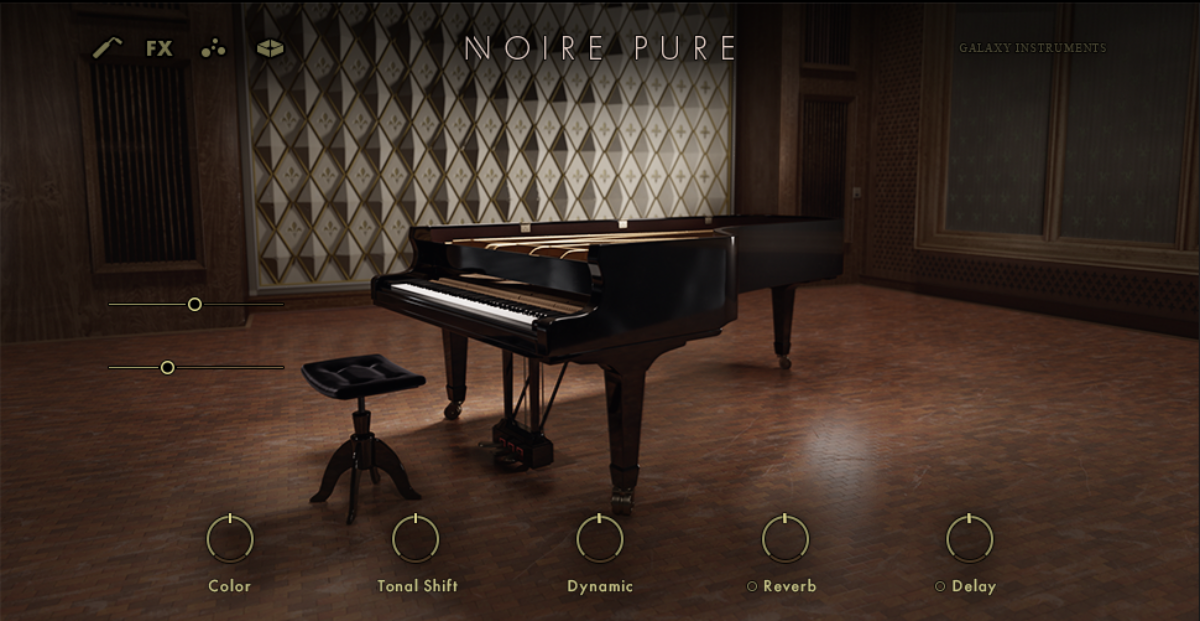
Native Instruments Noire was created in direct collaboration with composer and pianist Nils Frahm, recorded on a Yamaha CFX grand piano at his Saal 3 studio in Berlin. What sets this library apart from every other piano in the Komplete lineup is intent: Frahm did not want to capture a technically perfect concert grand. He wanted to bottle the sound he actually uses in his own productions, including the imperfections, the room, and the emotional weight of a late-night session. The result is a piano library that feels lived-in from the first note.
Noire ships with two core playing modes that define its character. The pure acoustic mode delivers the CFX with full dynamic range and Frahm's signature warmth, a sound that sits beautifully in a mix without needing heavy EQ treatment. The felt mode places a soft felt layer between the hammers and strings, muting the attack and producing a hushed ppp intimacy that no velocity layer alone can fake. These two modes give producers a single instrument that covers both the open and the whispered end of the emotional spectrum.
Rattle, Whoosh, and the Textures Frahm Built for Himself
Beyond the piano tones, Noire includes a set of built-in Rattle and Whoosh textures that Frahm originally created for his own productions. Rattle captures the mechanical resonance and subtle noise of the piano's internal hardware, strings vibrating against each other, damper felt brushing, and the subtle creak of the frame under sustain. Whoosh captures bow and breath-like sweeps recorded directly inside the instrument body. These are not afterthought FX patches. They are the actual textural elements you hear on albums like Spaces and All Melody.
Inside Kontakt, both texture layers can be blended directly with the piano tone using dedicated mix knobs. You can push Rattle to the front for a gritty, deconstructed texture, or keep it barely audible as an organic bed underneath clean chords. Whoosh works particularly well under slow melodic lines in ambient or film contexts, adding movement without a separate synth track. The integration is seamless because these textures were recorded in the same room on the same instrument, so they share the same acoustic fingerprint.
Where Noire Fits: Neo-Classical, Ambient, Film, and Indie Pop
The Grandeur remains the better choice for classical piano patches. The Gentleman is the instrument for a warm vintage upright. Noire occupies a specific creative lane: it was processed with Frahm's aesthetic in mind, which means it sounds dark and intimate at low velocities and open and resonant at high velocities, but it does not have the aggressive projection of a concert grand mic'd for a recital hall.
That lane is exactly where modern neo-classical and ambient producers live. Composers working on film underscore, trailer music, or singer-songwriter indie pop records will find Noire lands in a mix without fighting other elements. The felt mode in particular has become a go-to for producers who want piano but do not want it to dominate. It blends under vocals, string pads, and electronic textures with almost no editing. Producers like Ólafur Arnalds and similar artists have built entire sonic palettes around this type of prepared piano character.
Humanization and How Noire Compares to Other NI Pianos
The sample set in Noire was recorded with humanization baked in at the source. Frahm played the velocity layers himself rather than using a mechanical player, which means the timing micro-variations and tonal inconsistencies between velocity layers feel natural rather than programmatic. Combined with the round-robin sample cycling inside Kontakt, repeated notes do not trigger the machine-gun effect that plagues lower-quality piano libraries. Fast runs and repeated chords feel like a person playing, not a sample looping.
Comparing Noire to the broader NI piano catalog makes its positioning clear. The Grandeur is a large-hall concert grand aimed at classical and cinematic epic cues. The Gentleman is a slightly worn upright with vintage character, great for pop and soul. Noire is the artistic outlier, defined by its creator's identity rather than a generic use case. If you know Frahm's work and want to get inside that sound quickly, Noire is the most direct path available without renting his actual studio. For producers who do not know his work yet, the felt mode alone is worth the price of the library.
Frequently asked questions
Do I need the full Kontakt to use Noire, or does Kontakt Player work?
Noire runs in the free Kontakt Player, so you do not need a full Kontakt license. It is also included in several Komplete bundles, making it one of the most accessible high-quality piano libraries NI offers.
Is the felt mode realistic enough to replace a real prepared piano recording?
For most production contexts, yes. The felt layer was recorded on the actual CFX at Frahm's studio, so the timbre is authentic rather than simulated with a low-pass filter. For highly detailed classical or experimental music where a real prepared piano was specifically requested, nothing fully replaces a custom session, but for neo-classical and film work the felt mode holds up extremely well.
How do the Rattle and Whoosh textures affect CPU load?
Enabling both texture layers adds moderate CPU overhead because they run as separate sample streams alongside the main piano engine. On a modern production machine the load is manageable, but if you are running a dense session you can freeze the Noire track after committing your part. The textures are best dialed in during composition rather than automated heavily in real time.