
Reveal Sound Spire: The Trance and EDM Synth Built for Instant Professional Results
Spire combines a four-oscillator hybrid engine with one of the finest factory preset libraries in any synthesizer. Learn its architecture, modulation system, onboard effects, and how it compares to Serum for trance, progressive house, and EDM production.
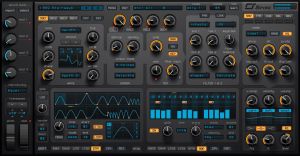
Reveal Sound Spire is the synthesizer that defined the modern trance and progressive house sound. Built around a four-oscillator hybrid architecture that blends analog warmth with digital precision, it delivers the thick supersaws, soaring leads, and deep pads that have driven the genre for over a decade. Every aspect of the engine is tuned toward musical results, making it the tool of choice for producers who want professional-quality output without spending weeks on sound design.
What sets Spire apart from most synthesizers at its price point is the sheer quality of its factory preset library. The included sounds are not placeholders or demonstrations: they are finished, production-ready patches that sit correctly in a mix from the moment you load them. For producers working in trance, progressive house, or commercial EDM, Spire removes the gap between inspiration and a polished result more effectively than any competing instrument.
Four-Oscillator Hybrid Engine and the Classic Spire Filter
Spire runs four independent oscillators simultaneously, each capable of operating in one of several modes including supersaw, superwave, FM, and ring modulation. The hybrid design means the engine can simulate the density of an analog polysynth while retaining the pitch stability and precision of digital synthesis. Stacking all four oscillators in supersaw mode with subtle detune between them produces the massive wall-of-sound character that defines trance leads and festival drops, and Spire handles this configuration without aliasing or CPU strain.
The filter section offers four distinct types: a low-pass, a band-pass, a high-pass, and the signature Spire filter — a non-linear analog-modeled design with a smooth resonance character that avoids the brittle peaks common in digital filters. The Spire filter is the reason pads and leads from this instrument sit comfortably in dense mixes: resonance adds presence without harshness at high settings. Routing filter cutoff to an envelope or LFO via the modulation matrix produces the sweeping, emotional filter movements central to trance production.
Each oscillator has its own detune, octave, and level control, and the oscillators can be combined freely across the stereo field. This flexibility means a single Spire patch can function as a complete lead arrangement layer — low oscillators providing body and high oscillators adding shimmer — without any external layering required.
Modulation Matrix and Eight Onboard Effects
Spire includes an eight-slot modulation matrix that connects any combination of sources — envelopes, LFOs, MIDI controllers, and internal modulators — to any destination parameter. Eight slots covers the vast majority of real-world patches: a filter envelope, a pitch LFO, stereo width modulation, and oscillator-level assignments cover the full range of typical trance and EDM patch architectures. The matrix is laid out as a straightforward grid, making it fast to read and edit even on complex patches.
The eight onboard effects chain includes chorus, phaser, flanger, delay, reverb, equalizer, distortion, and a stereo enhancer. The reverb and delay units are high enough quality to use as the primary spatial processing on a pad or lead without adding a separate plugin insert — a meaningful workflow advantage in dense sessions. Chorus and phaser together create the organic width that distinguishes Spire pads from the sharper stereo of wavetable-based alternatives.
Building a Supersaw Lead from Scratch
- Set all four oscillators to
supersawmode and bring their levels up equally. - Dial in gentle, varied
detuneacross the oscillators (try 10–20 cents spread) to create thickness without muddiness. - Open the Spire filter cutoff to around 70–80% and set resonance low for a clean, open sound.
- Add a fast filter envelope (high sustain, short attack) for presence on note attack.
- Enable chorus from the onboard effects chain and set depth to taste for stereo width.
- Adjust stereo spread per oscillator to distribute the layers across the field.
Spire vs. Serum: Analog Character vs. Visual Sound Design
Serum by Xfer Records and Spire represent two distinct philosophies for software synthesis. Serum is built around a visual wavetable editor that lets you draw, import, and morph waveforms in real time. Its strength is surgical precision: you can define exactly what harmonic content an oscillator produces and automate every aspect of that shape with a 16-slot modulation matrix. Producers who enjoy studying synthesis, building patches from raw materials, and constructing original timbres from scratch will find Serum deeply rewarding.
Spire takes the opposite approach. The factory preset library is its primary asset, and the engine is tuned to produce a specific character: thick, warm, and immediately musical. You are not presented with a blank waveform editor but with a set of oscillator modes designed to yield usable results quickly. The analog-modeled filter and the hybrid oscillator topology give Spire a density and warmth that Serum's wavetable engine does not replicate, which is why experienced producers who own both tend to reach for Spire when a patch needs to feel organic and weighty rather than precise and surgical.
Choosing between them is a question of creative workflow, not capability. Producers who want to write music and find finished sounds quickly will be more productive in Spire. Producers who want to design every element of a sound from first principles, or who work in genres where unique custom timbres matter, will prefer Serum's transparency. Many professional EDM and trance producers use both, treating Spire as a polished preset source and Serum as a design tool for original textures.
Frequently asked questions
Is Spire only useful for trance and EDM, or does it work in other genres?
Spire works well beyond trance and EDM. The engine is a full-featured polysynth capable of producing bass patches, plucks, pads, and textures that work across pop, cinematic, and ambient production. The warm hybrid oscillators and analog-modeled filter suit any genre that benefits from thick, organic-sounding synthesis, including chillout, downtempo, and melodic techno.
How steep is the learning curve for a producer who has only used Serum before?
Spire is straightforward for anyone familiar with subtractive synthesis. The four oscillators, filter section, envelopes, and modulation matrix follow conventional signal-flow conventions — readable within an hour. The main adjustment from Serum is the absence of a visual waveform editor: oscillator character is set by selecting a mode rather than drawing a shape. This is faster for most tasks, and the factory presets provide an extensive reference for how each oscillator mode behaves in context.
Can I create supersaw leads in Spire without buying additional presets?
Yes — the factory library ships with a comprehensive collection of supersaw leads covering the range from clean, airy trance leads to dense festival supersaws. Building one from scratch takes under two minutes; see the step-by-step guide in the article above for the exact workflow.
Recommended Related Products
Reveal Sound Spire
Polyphonic wavetable synth combining virtual-analog and digital engines.