
The Best Reverb Settings for Vocals: Plate, Hall, Predelay and Ducking
Reverb makes a vocal sit in a space, but the wrong settings turn it into mud. Here is how to choose plate versus hall, set predelay and decay, high-pass the tail and use ducking to keep your vocals clear and present.
Reverb places a vocal in a believable space, adds depth, and glues it to the rest of the mix. It is also one of the easiest effects to overdo. The gap between a professional vocal and an amateur one often is not whether reverb is there, but how it is shaped: the type, the predelay, the decay, the EQ on the tail, and whether it ducks out of the way of the words.
This guide covers the practical settings that make vocal reverb work, using the kinds of plate, hall and chamber algorithms you find in plugins like the Valhalla DSP bundle. The goal is reverb you feel rather than hear, supporting the vocal instead of washing it out.
Plate vs Hall: Choosing the Right Type
Plate reverb is the workhorse for vocals. It started life as a vibrating sheet of metal, and it has a dense, smooth, slightly bright character with no obvious room reflections, which is why it flatters most pop and rock vocals and sits cleanly in a busy mix. When in doubt, start with a plate.
Hall reverb models a large physical space with longer, more diffuse tails. It is gorgeous on ballads, slow vocals and exposed arrangements where you want a sense of grandeur and space. Chamber reverb sits between the two, with a natural roomy character that works well as a subtle background ambience. A common move is plate for the main body of the vocal and a longer hall or chamber for distant, atmospheric tails.
- Plate: dense and smooth, great default for pop and rock vocals.
- Hall: long and diffuse, ideal for ballads and exposed, spacious arrangements.
- Chamber: natural and roomy, a good subtle ambience layer.
- Layering: use a short space for immediacy and a longer one for depth.
Predelay: Keeping the Words Clear
Predelay is the gap between the dry vocal and the start of the reverb, and it is the single most important control for clarity. By holding back the onset of the tail, predelay keeps the reverb from smearing the consonants, so the vocal stays intelligible while still sitting in a rich space.
A very short predelay (0 to 10 ms) suggests a tiny room, 10 to 20 ms suggests a larger space, and 20 ms and up moves into the size of concert halls and cathedrals. For longer plate or hall reverbs on vocals, a predelay in the 20 to 60 ms range is a reliable starting point. You can also sync predelay to the tempo so the tail blooms in time with the track.
Decay and EQ on the Tail
Decay sets how long the reverb tail lasts. For a musical plate on vocals, a decay of around two seconds with a touch of predelay is a classic, flattering setting. Slower songs can handle longer decays; busy, up-tempo tracks usually need shorter ones so the reverb clears before the next phrase.
Many engineers also gently roll off the extreme highs to keep the tail from turning harsh and sibilant.
250–400 Hz. Low-mid buildup in the reverb tail is the number one cause of muddy vocals — clearing it lets you use more reverb without losing clarity.Use a Send, Not an Insert
Routing reverb to its own auxiliary return instead of inserting it directly on the vocal gives you independent control over the dry and wet signals, lets you EQ the tail without touching the dry vocal, and lets multiple vocals share one space for a cohesive mix.
- Create an auxiliary or return track in your DAW.
- Insert the reverb plugin on that return and set it to
100% wet. - Route the vocal to the return via a send — keep the send level as the main reverb depth control.
- EQ the reverb return independently: high-pass at
250–400 Hzand gently roll off harsh highs.
Ducking: Reverb That Gets Out of the Way
Ducking lets you use a generous amount of reverb without washing out the vocal. The result is a vocal that sounds big and lush in the spaces between phrases but stays clear and present during the words themselves — a hallmark of modern, polished vocal mixes.
- Insert a compressor on the reverb return track.
- Sidechain the compressor to the dry vocal signal.
- Set a medium attack and fast release so the tail ducks when the singer sings and fills back in during gaps.
- Combine ducking with a high-passed tail and sensible predelay for a complete professional vocal reverb.
Frequently asked questions
What reverb type is best for vocals?
Plate reverb is the most reliable default for vocals, especially in pop and rock, because it is dense and smooth without obvious room reflections. Hall reverb suits ballads and exposed, spacious arrangements where you want grandeur. Many engineers layer a plate for the main body with a longer hall or chamber for distant tails.
What predelay should I use on vocal reverb?
A predelay of roughly 20 to 60 ms is a solid starting point for plate and hall reverbs on vocals. Predelay separates the dry vocal from the reverb tail so consonants stay clear, and longer values suggest a larger space. You can also sync predelay to the song tempo for a more musical bloom.
Why does my vocal reverb sound muddy?
Low-mid buildup in the reverb tail is the most common cause. High-pass the reverb return at roughly 250 to 400 Hz to clear that buildup, which lets you use more reverb without losing clarity. Excessive decay and too much send level on busy tracks add to the mud as well.
What is reverb ducking and how do I set it up?
Ducking puts a compressor on the reverb return, sidechained to the dry vocal, so the tail pulls down while the singer is singing and fills back in during the gaps. It lets you use a generous amount of reverb while keeping the words clear and present, which is a hallmark of modern polished vocal mixes.
Recommended Related Products
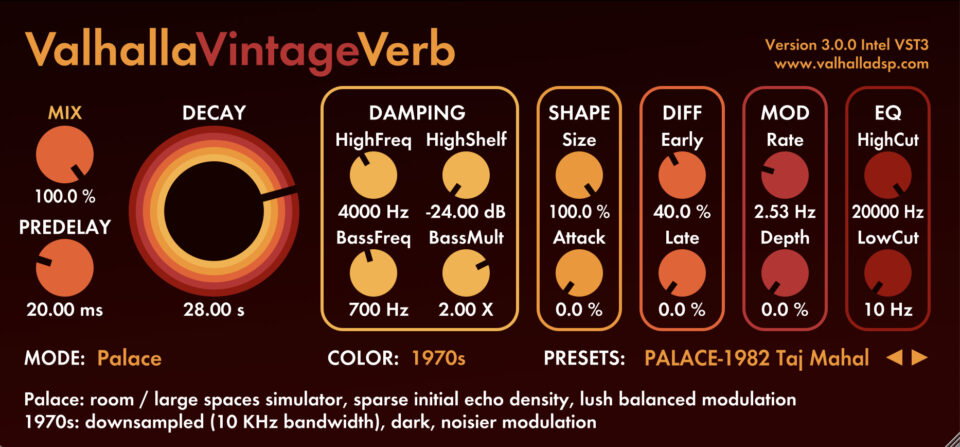
Valhalla DSP Bundle
World-class reverb and delay plugins - VintageVerb, Room, Delay, Supermassive and more.

Waves Total Bundle
The complete collection of 200+ Waves plugins for mixing, mastering, vocal processing and beyond.

FabFilter Total Bundle 2024
Mastering-grade audio effect plugins including Pro-Q 3 and Pro-C 2.