
Superior Drummer 3: Why It Is the Gold Standard for Virtual Drums
Superior Drummer 3 by Toontrack sets the benchmark for virtual drum production with a 230 GB library recorded by legendary engineer George Massenburg, a mixer model built on real studio mic science, and an enormous MIDI groove library. Learn what makes it exceptional and whether it is the right tool for your workflow.
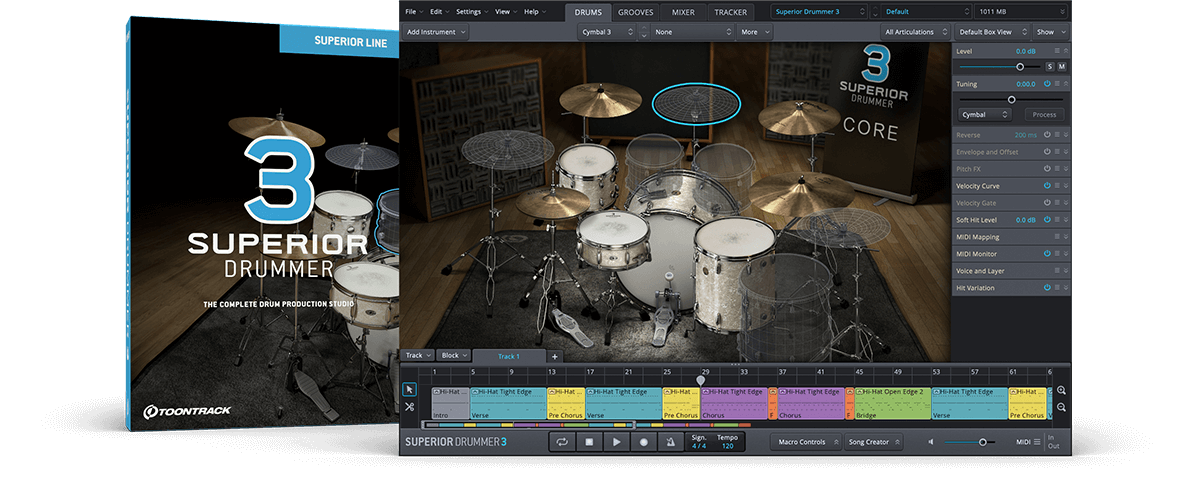
Superior Drummer 3 by Toontrack is the virtual drum instrument that professional producers and engineers reach for when the drum sound needs to hold up under the scrutiny of a major release. Its 230 GB core library was recorded by George Massenburg, one of the most respected engineers in recorded music history, across multiple world-class studio rooms with premium hardware. The result is a collection of drum sounds that carry the weight, air, and dimension of a real tracking session rather than the flat, compressed character common to sampled kits.
What separates SD3 from every lighter alternative is not just sample quality but the depth of control it offers over how those samples interact. The plugin replicates an actual multi-mic drum recording: you position microphones, control bleed between sources, adjust room reflections, and shape transients the same way an engineer would during a live session. This level of realism makes SD3 the preferred instrument for rock, metal, pop, jazz, and any genre where drum authenticity matters to the final listener.
The 230 GB Library and George Massenburg's Recording Approach
The SD3 core library was captured with meticulous attention to the physical acoustics of the recording environment. George Massenburg applied the same philosophy he uses on live sessions: every drum component was recorded at multiple velocity layers and round-robin variations to eliminate the machine-gun repetition that plagues lesser drum plugins. Kick drums, snares, toms, hi-hats, and cymbals were all captured with an extensive mic setup that preserves the natural interaction between sources rather than isolating each drum artificially.
The library includes multiple fully sampled acoustic kits, each recorded in a different room to give producers access to a range of tonal characters — from the tightly damped sound of a recording booth to the expansive bloom of a large live room. Additional snares, kick drums, and cymbal packs can be swapped into any kit independently, meaning the number of usable combinations extends well beyond the pre-built kit configurations.
Every hit is available at multiple mic positions simultaneously: close mics on each drum, overheads in multiple configurations, room mics at various distances, and ambient mics positioned at the edges of the studio space. This multi-layer mic architecture is what the SD3 mixer draws on when you build your drum sound, and it is the foundation that makes the results sound like a recording rather than a sample playback.
The Mixer Model: Mic Placement, Bleed, and Room Control
The SD3 mixer is the instrument's most distinctive feature, and it is what distinguishes the plugin from any drum tool that simply plays back samples through a basic output bus. Each mic channel in the mixer corresponds to a physical microphone position in the original recording. You adjust the level, pan, phase, and transient character of each mic independently, and the changes affect how the entire kit sounds in the same way moving a microphone changes a real recording.
Bleed control is a key part of this model. In a real drum session, the kick mic picks up low frequencies from the room, the snare mic catches a little hi-hat, and the overheads hear the entire kit. SD3 preserves these relationships with adjustable bleed amounts per source. You can tighten the bleed to get a more controlled, modern drum sound, or open it up to recreate the natural spill that gives vintage recordings their character. This single control shifts the entire vibe of a drum track without any additional processing.
The room and overhead channels give you access to the spatial dimension of the recording. Pulling up the room mics adds depth and size that no reverb plugin can fully replicate because it is real acoustic information captured in the same moment as the close mics. The result is a cohesive, phase-correct environment rather than a dry sample with reverb bolted on afterward.
MIDI Groove Library and SDX Expansion Packs
SD3 ships with an extensive MIDI groove library organized by genre, tempo, time signature, and feel. The grooves were performed by session drummers and cover everything from straight-ahead rock patterns to intricate jazz brush work and hip-hop pocket playing. Each groove includes variations, fills, and transitions that connect naturally, making it straightforward to construct a complete drum arrangement without writing a single MIDI note manually. The Search and Filter system inside the browser lets you narrow results by style and complexity in seconds.
The SDX expansion format extends the core library with new kits, new rooms, and new groove sets built to the same recording standard as the original content. Toontrack and third-party developers publish SDX packs covering specific genres such as metal, jazz, country, and studio pop, each with dedicated kit configurations and mic setups suited to that style. EZX packs — the lighter expansion format from Toontrack's EZDrummer line — are also compatible with SD3, giving you access to an even wider catalog of content within the same interface.
The combination of the built-in groove library and the SDX ecosystem means SD3 functions as a complete drum production environment rather than just a sound source. A producer can move from initial groove selection through arrangement, sound shaping, and final mixing without leaving the plugin, and the output is ready to sit in a mix without heavy post-processing.
SD3 vs EZDrummer and Addictive Drums: Choosing the Right Tool
EZDrummer 3, also by Toontrack, is the most direct comparison to SD3. It uses the same groove library format and shares some kit content, but its library is smaller, its mixer is simplified, and the mic routing options are more limited. EZDrummer 3 is designed to get a good drum sound quickly with minimal setup, and it succeeds at that goal. For producers working in pop, folk, country, or singer-songwriter styles where the drum sound is supportive rather than a focal point, EZDrummer 3 is a practical and cost-effective choice. SD3 becomes the right answer when the drum sound itself needs to carry the production — rock, metal, or acoustic-first genres where listeners notice every detail of the kit.
Addictive Drums 2 by XLN Audio is built around a different philosophy: it prioritizes tonal shaping and mixing speed over raw acoustic depth. Its kits are smaller in sample count but processed with built-in compression, EQ, and saturation that make them sit in a mix quickly with minimal work. Addictive Drums 2 is a strong choice for electronic-influenced genres, modern pop, and hip-hop where a polished, ready-to-use drum sound matters more than acoustic authenticity. The two tools are complementary rather than directly competitive.
Producers who need the full weight of a real drum recording, the flexibility to treat the mix like an engineer at a console, and access to a decade of expanding SDX content will find SD3 is the correct long-term investment. Producers who prioritize workflow speed, a lighter system footprint, and pre-processed sounds that are already genre-appropriate can get excellent results from EZDrummer 3 or Addictive Drums 2 at a lower entry cost.
EZX packs carry over into SD3 at no extra cost.Frequently asked questions
How much disk space does Superior Drummer 3 actually require?
The core SD3 library requires approximately 230 GB after installation. Toontrack's installer lets you select individual kits rather than the full library, so you can reduce the footprint if storage is limited. Each <code>SDX</code> expansion adds between 10 GB and 60 GB depending on the content. An SSD is strongly recommended for fast sample streaming, though a fast traditional hard drive works for smaller sessions.
Can I use Superior Drummer 3 without a separate drum machine or controller?
SD3 works entirely from MIDI, which you can input from any MIDI keyboard, pad controller, electronic drum kit, or by drawing notes directly in your DAW's piano roll. The built-in groove library removes the need to play in patterns manually: drag MIDI grooves onto your DAW timeline and edit them from there. A dedicated drum pad controller improves the feel when playing live, but it is not required for production use.
Is Superior Drummer 3 a good fit for metal and heavy rock production?
SD3 is one of the most widely used drum tools in metal and heavy rock production. Deep kick and snare sample layers, independent mic control, and bleed management let producers dial in the tight, powerful drum sounds that define the genre. The <strong>Metal Foundry SDX</strong> expansion is specifically designed for extreme metal, with kicks and snares recorded to handle heavy downtuned guitar context. The mixer model also allows aggressive gating and transient shaping on individual mic channels, which is standard practice in metal drum mixing.
Recommended Related Products
Toontrack Superior Drummer 3
Ultimate drum production studio with a massive 230 GB sound library.